
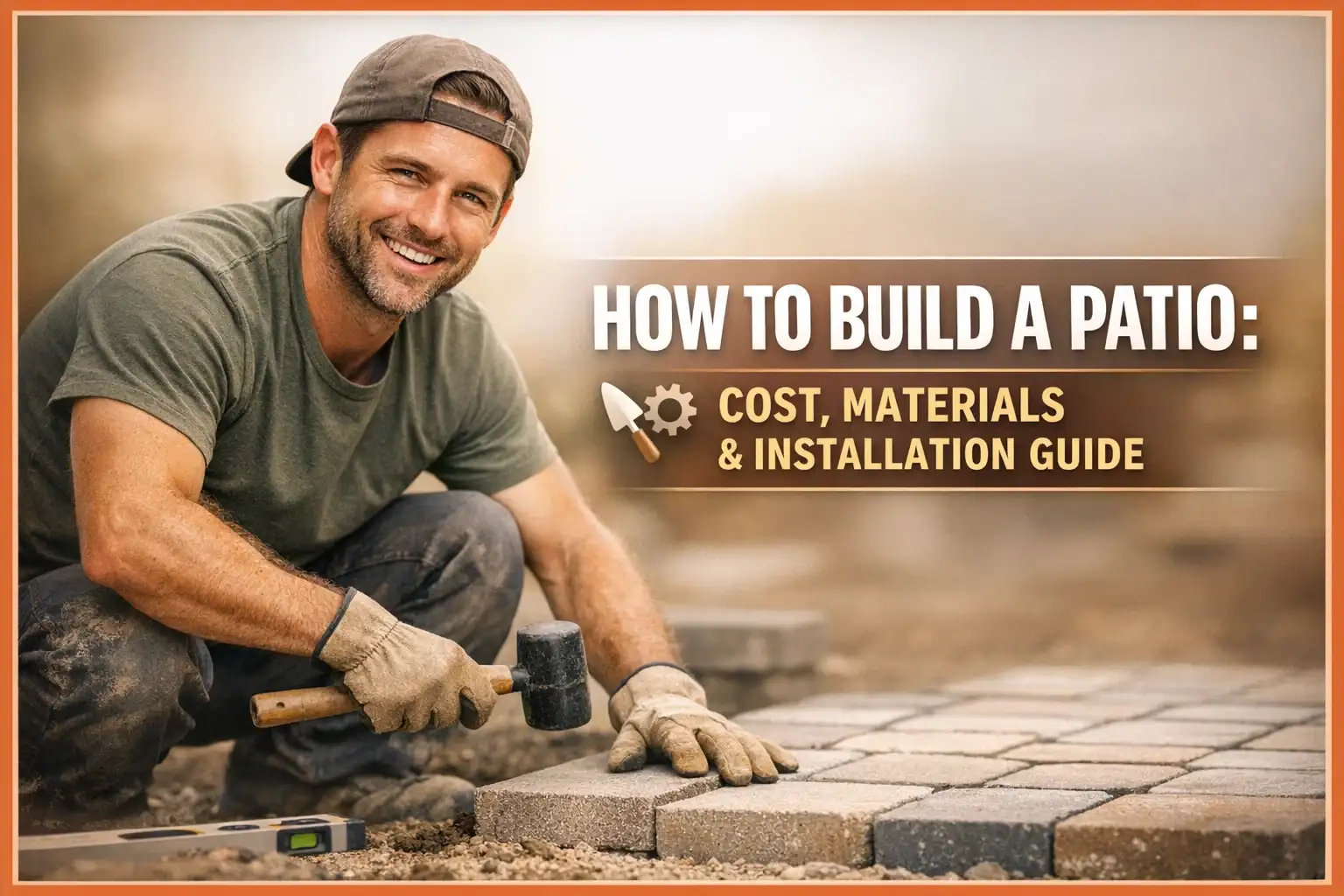
You look out at your backyard and see wasted space. Maybe it’s a patch of uneven grass, cracked old concrete, or just bare dirt baking in the Texas sun. You know a patio would change everything a place to grill, relax, or host friends ,but you have no idea where to start, what it costs, or what materials to use. That confusion stops a lot of people before they even begin.
This outdoor patio guide walks you through the full process — from planning and patio base material selection to cost estimates and the actual installation steps. Whether you’re comparing concrete vs pavers patio options or just trying to understand how to build a patio without getting in over your head, you’ll find clear answers here.
Start With a Solid Plan
Before you order a single paver or mix a bag of concrete, you need a plan. The biggest mistakes in patio builds happen at the planning stage — not during installation. Skipping drainage planning or misjudging the slope of your yard can leave you with a patio that floods every time it rains.
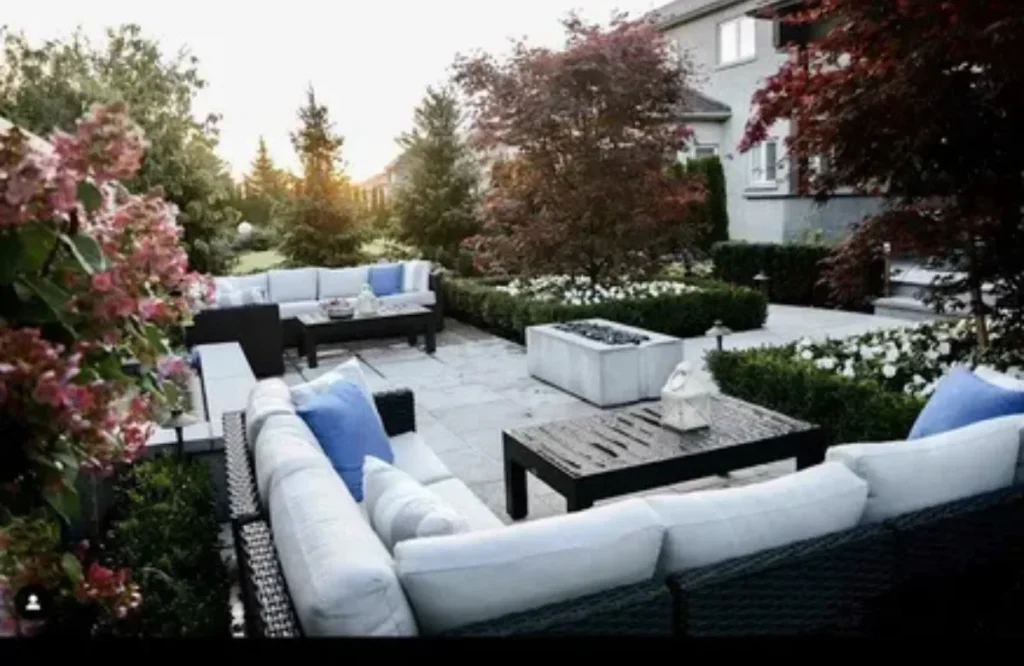
Start by measuring your space and sketching a rough layout. Think about how you’ll use the patio — dining, lounging or a fire pit area? Each use changes the ideal size and shape. A typical patio for outdoor dining runs around 12×16 feet, while a larger entertaining space might stretch to 20×20 or beyond.
Check your yard’s grade. Water should always run away from your home, not pool on your new patio surface. Site grading and leveling are non-negotiable steps in any outdoor hardscape design.
Concrete vs Pavers: Which One Is Right for You?
The concrete vs pavers patio debate is one of the first decisions you’ll face. Both work well, but they suit different budgets, styles, and maintenance preferences.
Poured Concrete Patios
Concrete pouring and finishing give you a clean, seamless surface that’s hard to beat for durability. It’s usually the lower-cost option upfront, ranging from $6 to $12 per square foot installed. Stamped or colored concrete can mimic stone or brick. The downside: if it cracks, repair is harder and more visible.
Paver Patios
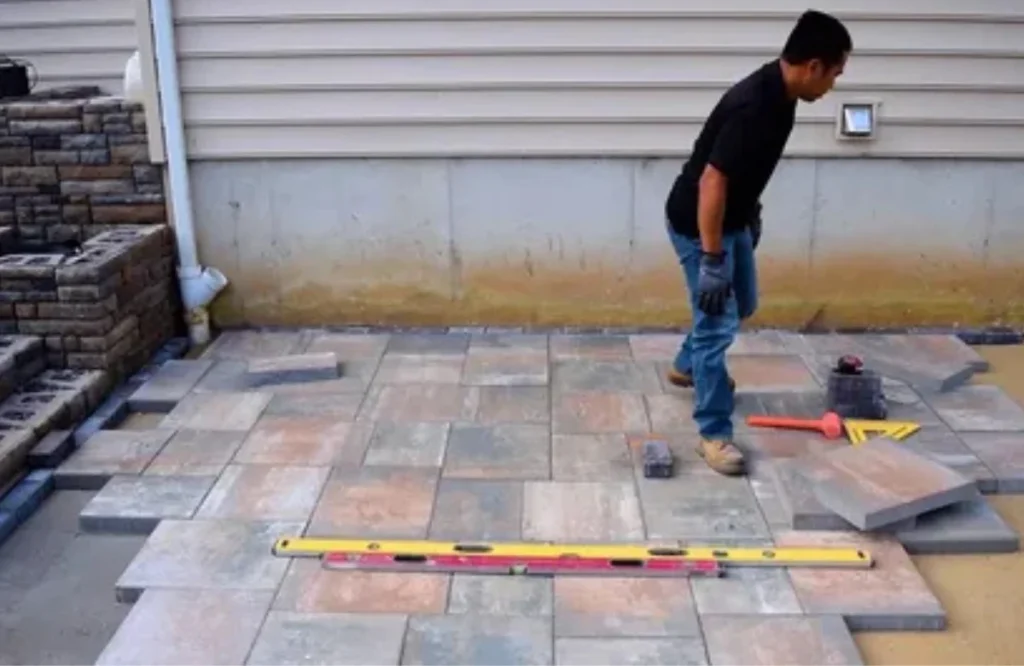
Paver installation offers more design flexibility and is easier to repair — you replace individual pieces instead of patching concrete. Paver patio cost typically runs $10 to $20 per square foot installed. Natural stone and travertine cost more but improve curb appeal.
Pavers also perform better when installed over a properly prepared base, especially in areas with heat and drainage concerns like Arlington.
Breaking Down Patio Costs
Material cost estimation for a patio involves more than just the surface material. Many homeowners underestimate total project costs.
- Excavation and compaction: $1–$3 per sq ft
- Patio base material: $0.50–$2 per sq ft
- Surface material: $6–$20 per sq ft
- Joint sand and sealing: $1–$3 per sq ft
- Labor and equipment: 30–50% of total cost
A 300-square-foot patio typically ranges from $3,000 to $8,000 for concrete and $4,500 to $12,000 for pavers in the Arlington area.
The Base Is What Makes or Breaks Your Patio
A patio is only as strong as what sits underneath it. Weak base preparation is the number one reason patios fail over time.
Excavation and Grading
You need to excavate 6 to 8 inches below finished height. This allows space for base layers and surface materials. Proper slope is critical — about 1/8 inch per foot away from the house — to support drainage planning.
Laying the Base Layers
A 4-inch layer of compacted crushed stone forms the main foundation. It should be compacted in layers, not all at once. For pavers, a 1-inch bedding sand layer is added on top for leveling and stability.
Step-by-Step Patio Installation Guide
Step 1: Mark and Excavate
Define the layout using stakes and string. Excavate to the required depth and remove all debris, roots, and soft soil.
Step 2: Compact the Subgrade
Compact the native soil using a plate compactor. Add geotextile fabric if the soil is weak or clay-heavy.
Step 3: Install and Compact the Base
Add crushed stone in layers and compact each one thoroughly. Maintain proper slope throughout.
Step 4: Lay the Surface Material
For pavers, screed bedding sand and set each unit carefully. For concrete, set forms, pour, level, and finish the surface evenly.
Step 5: Finish and Seal
Fill joints with polymeric sand and compact lightly. Seal the surface to protect against stains and weather damage.
Patio Installation Tips That Actually Matter
Never skip compaction — every layer must be firm before moving forward.
Plan drainage before construction begins, not after problems appear.
Use edge restraints for pavers to prevent shifting.
Allow proper curing time for concrete before placing heavy furniture.
Seal the surface to extend lifespan and maintain appearance.
DIY vs. Hiring a Pro: Which Makes Sense?
Smaller patios can be handled by experienced DIY homeowners, but larger projects quickly become complex. Excavation depth, drainage control, and base compaction require precision and proper equipment.
Professional installers bring experience, commercial tools, and efficiency that reduce long-term risk. Poor installation often leads to shifting, cracking, and costly repairs. A properly built patio can last decades when done correctly.
Ready to Build Your Dream Patio in Arlington, TX?
All Star Construction Group specializes in complete patio construction and outdoor living solutions across Arlington, TX. From concrete pouring and finishing to full paver patio installation with drainage planning and sealing, every step is handled with precision.
We also offer artificial turf installation, hot tub installation, sauna services, and full concrete work for outdoor transformations.
Visit All Star Construction Group or request a free estimate today.
Frequently Asked Questions
How much does it cost to build a patio in Arlington, TX?
Most patios range from $3,000 to $12,000 depending on size and material choice. Pavers cost more upfront but offer better repair flexibility over time.
What is the best base material for a patio?
Compacted crushed stone is the most reliable base. It provides drainage and structural stability. Bedding sand is added for paver installations.
Should I choose concrete or pavers for my patio?
Concrete is more affordable initially, while pavers offer better design flexibility and easier repairs. The right choice depends on budget and long-term goals.
How long does patio installation take?
Most projects take 2–5 days. Concrete requires additional curing time before use.
Do I need a permit to build a patio in Arlington, TX?
Most ground-level patios do not require permits, but HOA rules and special structures may change requirements. Always verify locally before starting.